
Nahida Akter
The rapid advancement of artificial intelligence (AI) has brought significant changes to creative industries, including graphic design. With the emergence of generative AI platforms such as DALL·E, Midjourney, Canva and Adobe Firefly, the capacity of machines to generate logos, layouts, and illustrations has accelerated dramatically. This has raised an important question: is AI a replacement for human graphic designers? While AI undeniably reshapes design processes by automating tasks and expanding creative possibilities, it cannot fully replace the depth of human creativity, cultural awareness, and strategic thinking that are essential to professional design practice.
Particularly, AI-powered tools are effective in performing repetitive and time-consuming tasks. They can quickly generate templates, suggest typographic pairings, and produce variations of a single design concept in seconds. This efficiency reduces production costs and makes design more accessible to individuals and small businesses with limited budgets. For example, Canva’s AI-driven design suggestions allow non-designers to produce professional-looking marketing materials without specialized training. In this sense, AI democratizes access to design resources that were once exclusive to professionals.
Despite its strengths, AI struggles with aspects of design that require interpretation, empathy, and originality. Graphic design is not only about visuals but about conveying messages that resonate with specific audiences and cultural contexts. For instance, a designer who works with a nonprofit organization, must understand it’s values, the emotions they wish to evoke, and the sensitivities of the target audience. In contrast, AI relies on patterns from pre-existing datasets and lacks the ability to anticipate subtle cultural cues or ethical implications.
Undoubtedly, AI has emerged as a collaborative tool rather than replacing designers who can integrate AI into their workflow to speed up routine tasks while reserving their expertise for concept development, storytelling, and client relations. Still, AI art depends on human creativity to guide prompts, evaluate results, and ensure originality. In fact, the designers who adapt AI may become more valuable, leveraging technology to focus on higher-level problem-solving and strategic decision.
In addition, the ethical challenges of AI in design need to be addressed. Especially, there are concerns about copyright, plagiarism, and bias have surfaced as AI models often generate content based on vast datasets scraped from the internet. Therefore, designers must navigate not only design but also take legal and ethical responsibilities, reinforcing the need for human oversight.
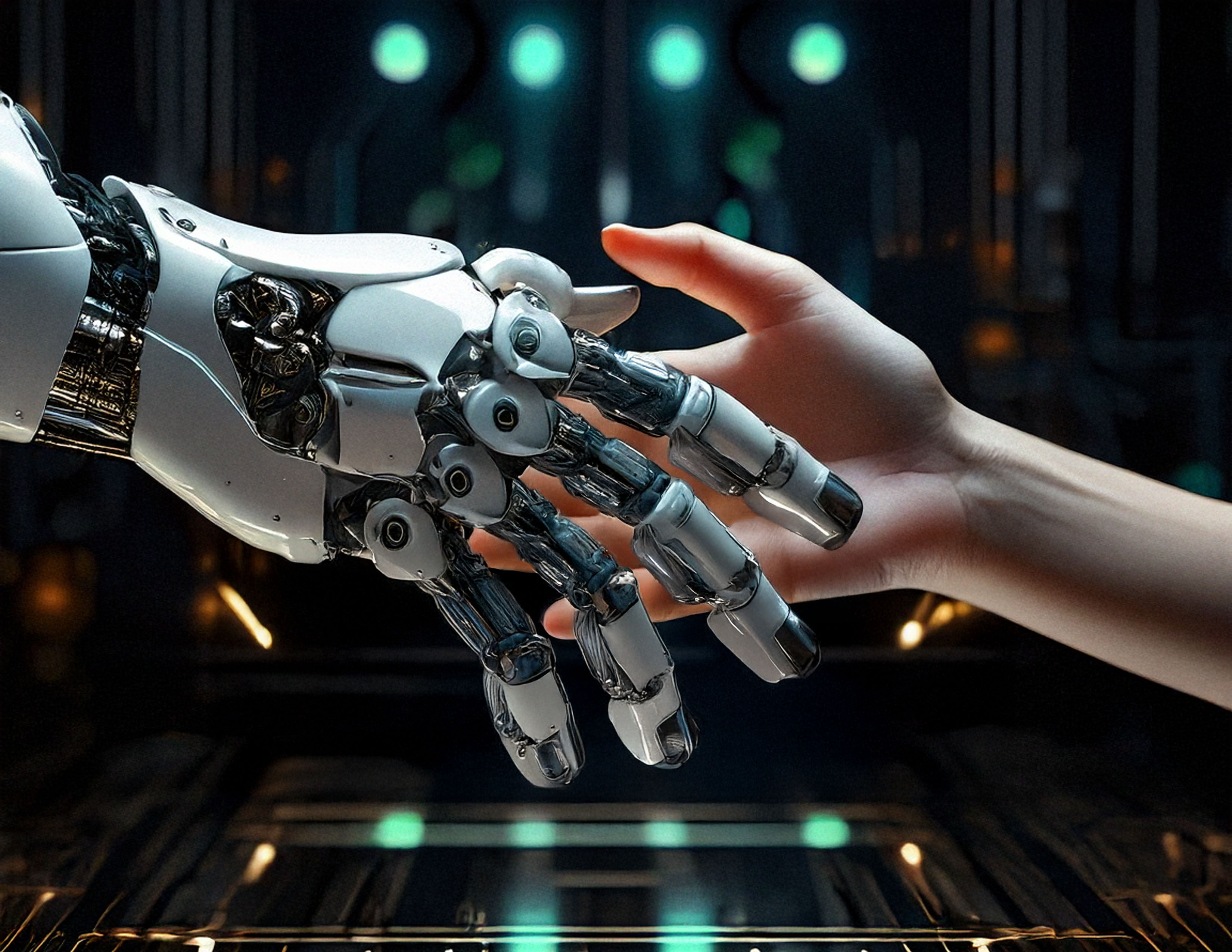
It can be concluded that AI should not be seen as a replacement for a graphic designer but as a transformative partner. As it offers speed, efficiency, and accessibility, but lacks the human capacity for empathy, originality, and strategic storytelling. The future of graphic design is likely to be hybrid where algorithms handle mechanical tasks while human designers continue to shape meaningful, culturally sensitive, and impactful communication. Thus, far from erasing the profession, AI may elevate it by allowing designers to focus on the essence of creativity.
References
Anscomb, C. (2024). Creating Images with Generative AI: An Imaginative Aid?. In Artificial Intelligence, Co-Creation and Creativity (pp. 77-88). Routledge.
McCormack, J., Gifford, T., & Hutchings, P. (2019, April). Autonomy, authenticity, authorship and intention in computer generated art. In International conference on computational intelligence in music, sound, art and design (part of EvoStar)(pp. 35-50). Cham: Springer International Publishing.
Park, Y. S. (2023). Creative and critical entanglements with AI in art education. Studies in Art Education, 64(4), 406-425.