
By Nahida Akter
Photo: Nahida Akter
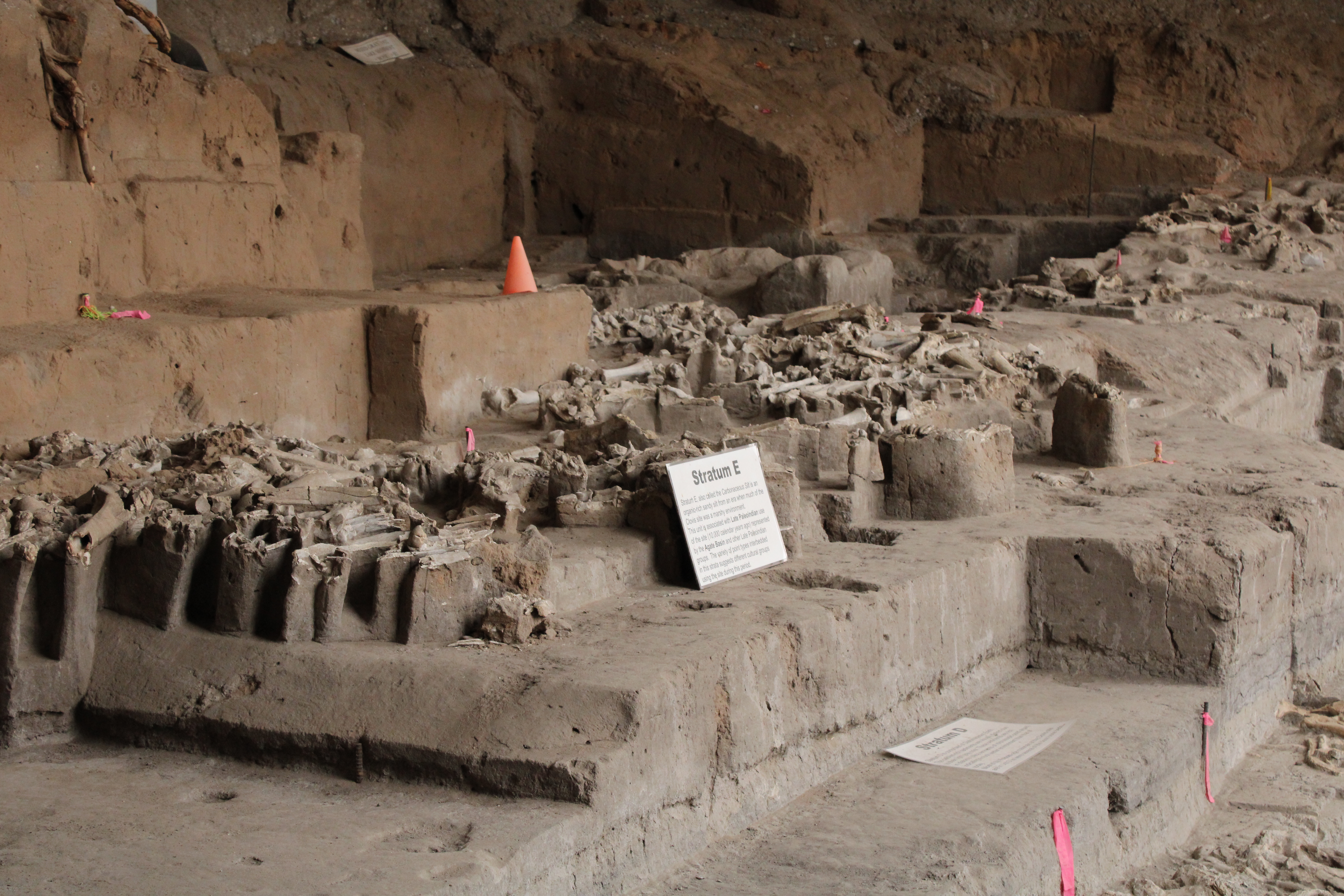
Just beyond Portales and Clovis, New Mexico, a quiet dip in the landscape holds a story more than 13,000 years old. At first, Blackwater Draw appears ordinary like wide open plains, pale earth, and endless sky but beneath that still surface lies one of North America’s most significant archaeological sites. It is here that scientists first confirmed humans lived alongside and hunted Ice Age megafauna, forever reshaping our understanding of early life in the Americas.
Blackwater Draw is best known as the type-site of the Clovis culture, a prehistoric group identified through distinctive fluted spear points. In the early 1930s, as gravel mining exposed ancient bones and stone tools, researchers realized they were looking at something extraordinary: mammoth remains found in direct association with human-made weapons. This discovery provided the first solid evidence that early humans hunted large, now-extinct animals in the New World.
A Landscape of Survival
During the late Pleistocene epoch, Blackwater Draw site was not the dry basin it appears to be today. The area once held a spring-fed lake that attracted animals and the people who hunted them. Over thousands of years, generations returned to the site, leaving behind layers of tools, bones, and campsites. Archaeologists have documented multiple cultural periods here, including Clovis, Folsom, and later Archaic occupations, making the site a rare, stratified record of human activity across millennia.
The Blackwater Draw Museum on Eastern New Mexico University’s Portales campus is particularly significant because of how well the site has been preserved. The Artifacts such as stone tools, bone implements, and even ivory collection offer insight into how early peoples adapted to changing environments, hunted efficiently, and used available resources with remarkable skill.
From Dig Site to Landmark
Blackwater Draw Site was designated a National Historic Landmark in 1961 for its recognized importance. Today, the site is maintained by Eastern New Mexico University, which continues to support research, education, and preservation efforts. Last week they arranged a Hands-On History Day event where the people were invited for their Grand Re-Opening of the Visitor’s Site. That was a fun event packed with interactive activities like atlatl competition, rock painting, artifact exhibition and many more.
Just a short distance away, the Blackwater Draw Museum serves as the interpretive heart of the site. Originally built in 1969 and now located on the ENMU campus, the museum houses artifacts recovered from excavations and places them in historical context through exhibits and educational programming. Displays include Clovis projectile points, Ice Age animal remains, and materials from later Southwestern cultures, helping visitors connect the ancient past to the present.
Why Blackwater Draw Still Matters
Blackwater Draw is more than an archaeological site, it is a reminder that history often lies hidden beneath our feet. What began as a local curiosity became a cornerstone of American archaeology, challenging long-held assumptions and opening new questions about migration, adaptation, and survival.
For students, researchers, and visitors alike, Blackwater Draw offers a rare opportunity to stand where some of the earliest inhabitants of North America once hunted, camped, and lived. In the quiet of the High Plains, the past still speaks if you know where to look.